

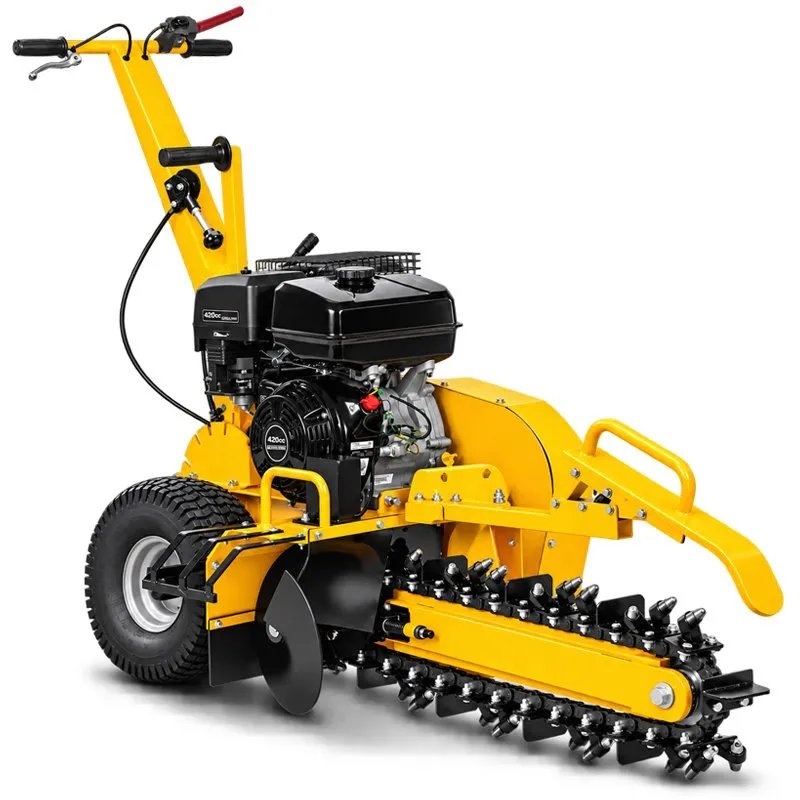
A chain trencher is a specialist machine designed to excavate long, narrow and consistent trenches for electrical cables, fibre-optic networks, water pipes and irrigation systems. Discover how it works, how it compares with a mini excavator and which technical and financial factors matter when selecting equipment for professional groundwork and utility installation.
A chain trencher is a specialist machine designed to produce narrow, uniform and repeatable linear trenches. It is most commonly used when installing electrical cables, fibre-optic lines, water pipes, irrigation systems and technical services. The CORMAK range includes chain trenchers for linear excavation work designed for these applications.
Unlike a conventional excavator fitted with a bucket, the machine uses a moving chain equipped with cutting teeth. This allows operators to limit trench width and the volume of excavated soil. A correctly selected machine can speed up the preparation of utility routes and reduce the amount of reinstatement work required afterwards.
How does a chain trencher work?
The main component is a guide bar carrying a moving digging chain. Its teeth penetrate the ground, loosen the soil and carry the excavated material out of the trench. The operator sets the required working depth and guides the machine along a previously planned route.
The result is a trench with a relatively consistent width and controlled depth. However, accuracy and working speed depend on the machine's construction, soil type, obstacles and operator experience.
One example is the CORMAK GF1500 chain trencher. According to the manufacturer, it produces trenches 100 mm wide and up to 600 mm deep. Its available digging depth settings are 150, 300, 450 and 600 mm. The maximum engine output is stated as 15 hp, while the rated power is 9.0 kW.
These figures are catalogue specifications. Actual digging performance depends on factors including soil compaction, moisture, the presence of stones and the condition of the cutting chain.
What is a chain trencher used for?
A chain trencher for utility trenches can be used on private properties, industrial sites, farms and construction projects. It is particularly useful when services need to be installed over long distances without excavating a wide trench.
Typical applications include trenches for:
- electrical cables and power supply lines,
- fibre-optic cables and telecommunications networks,
- water pipes and technical service conduits,
- automatic irrigation systems,
- selected drainage installations,
- garden and outdoor lighting,
- control cables and automation systems,
- selected components of fencing installations.
A narrow trench reduces disturbance to lawns, gardens, paths and landscaped areas. Less excavated soil also means less material to stockpile, move and subsequently reuse when backfilling.
However, installation requirements for burial depth, bedding, protection and separation distances must still be followed. These depend on the service being installed, applicable regulations and the project specification. Being able to excavate a trench of a particular size does not automatically make it suitable for every cable or pipe.
For projects that also involve levelling ground, moving large quantities of soil or preparing construction areas, it is worth considering the wider range of CORMAK earthmoving and construction equipment.
Chain trencher or mini excavator?
A mini excavator is a more versatile machine. It can produce trenches of different widths, dig and move soil, shape the ground and work with suitable attachments. It is a good choice when tasks vary and are not limited to preparing narrow utility trenches.
A chain trencher, by contrast, is designed primarily for long, narrow trenches with consistent width. When laying tens or hundreds of metres of cable or pipe, it can reduce the amount of excavated material compared with using a wider excavator bucket.
This does not mean it is the better machine in every situation. Numerous obstacles, wide excavations, exposing existing underground services or moving substantial volumes of earth may make a mini excavator more suitable.
An example of a more versatile machine is the CORMAK KL12 tracked mini excavator, intended for groundwork, installation and landscaping tasks.
When is a chain trencher worth choosing?
Purchasing a chain trencher can be particularly beneficial for electrical contractors, telecommunications installers, utilities contractors, landscaping businesses and construction companies. The greatest advantages arise when similar linear trenches are excavated regularly.
Digging a long trench by hand requires considerable time and labour. A standard excavator bucket, meanwhile, may remove substantially more soil than is actually needed for a single cable. In these circumstances, a specialist trencher helps achieve repeatable trench dimensions while reducing the overall volume of earthworks.
The business case depends mainly on the frequency of projects, the total length of utility routes, labour costs, machine transport, wear on the chain and cutting teeth, and the opportunity to use the machine on future jobs.
For a single short trench, purchasing specialist equipment is not always financially justified. It is sensible to compare the purchase price with equipment hire or employing a specialist contractor.
How do you choose a chain trencher?
Before purchasing, consider the required trench dimensions, soil type, frequency of use, access to the work area and transport arrangements. Engine power alone is not a sufficient selection criterion.
Digging depth and trench width
The key specifications are maximum digging depth and trench width. Both must accommodate the installed service and any required bedding, protection and backfilling space. Insufficient depth restricts applications, while an unnecessarily wide trench increases the volume of excavated soil.
Engine power and digging system design
Performance depends not only on the engine but also on drive gearing, guide bar construction, chain design, and the material and geometry of the cutting teeth. Maximum power should be distinguished from rated power. It is also important to check the conditions under which the manufacturer specifies the machine's performance.
Mobility, servicing and wear parts
Machine dimensions, manoeuvrability, stability and access to the work area all matter. Chains and cutting teeth are naturally subject to wear. Check how they can be adjusted or replaced and whether suitable spare parts are readily available. For businesses carrying out regular work, accessible servicing can help minimise unplanned downtime.
How do ground conditions affect trenching?
Ground conditions directly affect digging speed and the load placed on the cutting components. In relatively uniform, easily excavated soil, a chain trencher can operate efficiently. Highly compacted or stony ground and areas containing large roots require greater caution and may limit performance.
Before work begins, existing underground services must be identified using available records and the necessary utility checks. Appropriate protective procedures and, where required, carefully controlled trial holes should be used near buried cables, pipes and other infrastructure. Mechanical excavation should never be assumed safe without first investigating the site.
Operators must follow the manufacturer's instructions, inspect cutting components and never attempt to clear blockages while the drive is running. Suitable personal protective equipment and safe distances for bystanders are also essential.
If site preparation involves removing tree stumps, the guide stump grinder – what is it used for and when should you choose one? may also be useful. Removing obstacles before excavation can make planning a utility route easier.
Summary
A chain trencher is used to create long, narrow and consistent trenches for electrical cables, fibre-optic networks, pipes, irrigation systems and selected technical services. Its main advantages include a limited trench width, reduced spoil volumes and efficient preparation of linear installation routes.
Before purchasing, assess digging depth and width, cutting system design, ground conditions, mobility and spare parts availability. A chain trencher cannot replace a mini excavator in every application, but it can be the more practical option for regular, narrow utility trenching.
Choosing the right model should begin with reviewing the most common jobs undertaken and comparing the technical specifications with the actual requirements of the installation.
