


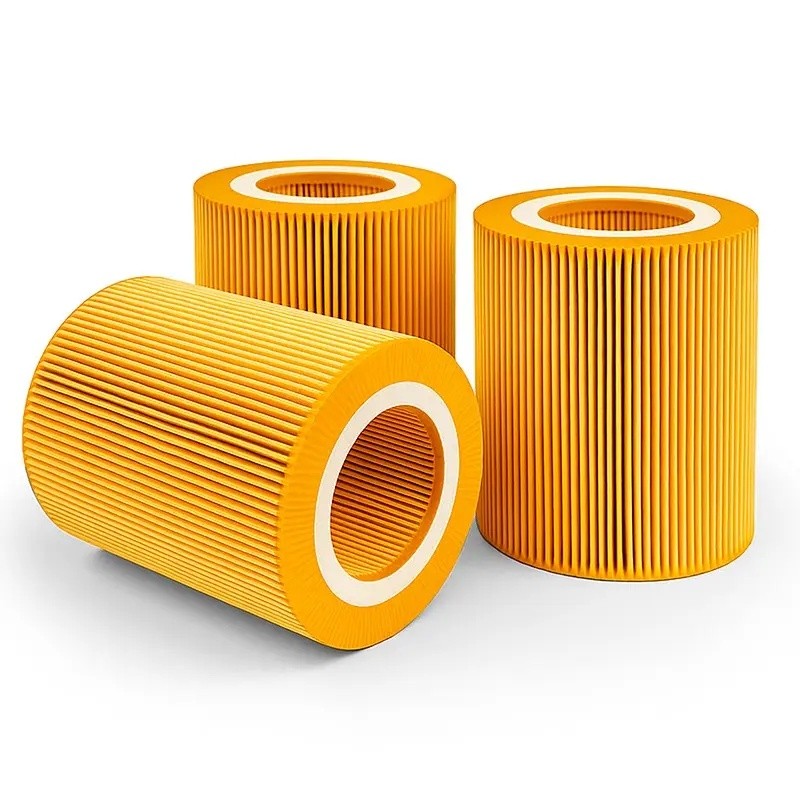
Compressed air is used in workshops, production facilities, paint shops, automation and many other industries. However, in order for it to power pneumatic equipment correctly, it must be of the right quality. A compressor alone is not always sufficient – a properly designed air treatment system is also of crucial importance. One of its key components is the filter. Which air filter is best suited for a compressor? The answer depends primarily on the type of contaminants, the required purity class and the parameters of the entire system.
Which air filter should you choose for a compressor?
Compressed air is used in workshops, manufacturing facilities, paint shops, automation systems and many other industrial sectors. To supply pneumatic equipment reliably, it must meet the appropriate air quality requirements. A compressor alone is not always sufficient: a properly designed filtration and drying system may also be necessary.
Which air filter should you choose for a compressor? The answer depends on the contaminants present, airflow, operating pressure and required purity class. It is also important to distinguish the compressor's intake air filter from the filters used to treat compressed air before it reaches the point of use.
Contents
- Why is compressed air filtration important?
- Intake filters versus compressed air filters
- Filter types and filtration stages
- How to select a filter for your system
- Filtration, air dryers and air receivers
- Filter maintenance and equipment service life
- Summary
Why is compressed air filtration important?
Atmospheric air contains dust, dirt, water vapour and sometimes oil aerosols and other contaminants. During compression, the quantity of contaminants in a given volume of air increases. In oil-lubricated compressors, the lubrication system can introduce an additional source of contamination.
If contaminants reach the end-use equipment, they can accelerate wear in valves, cylinders, pneumatic tools and control components. Moisture encourages corrosion, while oil and fine particles can cause problems during spray painting and other processes sensitive to air cleanliness.
Correct filtration helps reduce these risks and maintain stable operating conditions. However, one filter cannot remove every type of contamination. In practice, compressed air treatment often requires several stages.
Intake filters versus compressed air filters
Before purchasing a filter, establish the function it needs to perform. An intake air filter is fitted on the suction side of the compressor. It captures dust and larger solid particles, helping protect the compression elements against mechanical wear.
A compressed air line filter is fitted downstream of the compressor at an appropriate point in the system. Depending on its design, it removes solid particles, liquid droplets or oil aerosols. It therefore plays a major role in the quality of air delivered to pneumatic equipment.
Lubricating oil filters and internal air-oil separators in oil-lubricated compressors perform different functions. They should not be considered replacements for downstream line filters. When choosing CORMAK air filters, oil filters and separators, confirm compatibility with the compressor model and the intended purpose of each component.
Filter types and filtration stages
There is no universal filter suitable for every application. A workshop using pneumatic impact wrenches may require a different standard of air treatment from a paint shop or a continuously operating production line.
Common filter solutions include:
- Pre-filters and particulate filters – capture dust and other solid particles according to the filter element's performance rating.
- Coalescing filters – capture fine water droplets and oil aerosols, allowing them to combine into larger droplets that are discharged as condensate.
- Fine filters – reduce smaller particles or aerosols in accordance with their technical specifications.
- Activated carbon filters – adsorb oil vapours, certain gaseous contaminants and odours. They require appropriately pre-treated air.
A particulate filter does not replace an air dryer, and activated carbon is not intended to remove substantial quantities of liquid water. Effective treatment depends on combining the appropriate stages in the correct sequence.
| Filter type | Main function | Typical application |
|---|---|---|
| Intake filter | Capture dust before the compressor | Protecting the compression stage |
| Pre-filter | Remove larger particles and selected liquid droplets | Basic air treatment |
| Coalescing filter | Separate fine liquid aerosols | Reducing oil and water aerosols |
| Fine filter | Remove smaller contaminants | Equipment requiring higher air purity |
| Activated carbon filter | Adsorb oil vapour and selected gases | Painting and vapour-sensitive processes |
How to select a filter for your system
Selecting a filter should be based on actual operating conditions rather than purchase price alone. The most important parameters include:
- Airflow – the filter must accommodate the system's demand, taking into account the reference conditions used for the manufacturer's flow rating.
- Working pressure – both the housing and filter element must be suitable for the operating pressure range.
- Contaminant type – solids, liquid water, aerosols and oil vapours require different treatment methods.
- Required air purity – ISO 8573-1 defines separate purity classes for solid particles, water and oil.
- Pressure drop – excessive flow resistance reduces the pressure available to connected equipment.
- Installation conditions – connections, temperature, flow direction, condensate drainage and maintenance access must be considered.
When selecting filters for CORMAK screw compressors, compare the air requirements of all connected equipment with the capacity of the complete installation, not merely the compressor's stated output.
An undersized filter can create excessive pressure drops and reduce the effectiveness of pneumatic tools. A filtration rating expressed in micrometres also does not automatically guarantee a particular compressed air purity class.
Filtration, air dryers and air receivers
In larger installations, filtration is one element of comprehensive compressed air treatment. An example system may contain a compressor, condensate separator, pre-filter, dryer, fine filter and end-use equipment. The final arrangement depends on the manufacturers' instructions and process requirements.
Refrigeration dryers reduce the moisture content of compressed air by cooling it and draining the resulting condensate. They do not replace all filtration stages, particularly when oil vapour removal is required. An example of the equipment available is the CORMAK IZBERG N10S refrigeration air dryer, whose capacity and operating conditions should be checked against the installation requirements.
Air receivers are also important. They store compressed air, help stabilise pressure and accommodate short-term demand peaks. A receiver can encourage condensate formation and separation, but it does not replace a dryer or fine filter. The CORMAK 200-litre horizontal air receiver provides an example of this type of component.
For processes requiring particularly clean air, such as precision spray painting, the specific equipment requirements should be followed and air quality checked at the point of use.
Filter maintenance and equipment service life
Regular maintenance is just as important as correct filter selection. As contaminants accumulate in the element, airflow resistance increases. This may require the compressor to generate a higher pressure, potentially increasing energy consumption.
During maintenance, operators should:
- check the pressure drop across the filter where suitable indicators are fitted,
- replace elements according to the manufacturer's instructions and actual operating conditions,
- check that condensate drains operate correctly,
- inspect connections for leaks and filter housings for damage,
- use elements compatible with the equipment model and operating parameters.
Before opening a filter housing, safely isolate and depressurise the relevant section of the system in accordance with the instructions. Never open a pressurised filter housing.
Filtration helps protect both the compressor and downstream pneumatic equipment, reducing contamination, component failures and unplanned production interruptions.
Summary
Which air filter should you choose for a compressor? First establish whether the compressor intake needs protection or the delivered compressed air needs treatment. Then match the filtration stages to the contaminants, airflow, pressure and equipment requirements.
For more complex installations, filtration, drying, compressed air storage and maintenance should be planned together. The CORMAK compressed air equipment range provides different components to compare against the actual requirements of the workshop or production facility.
