


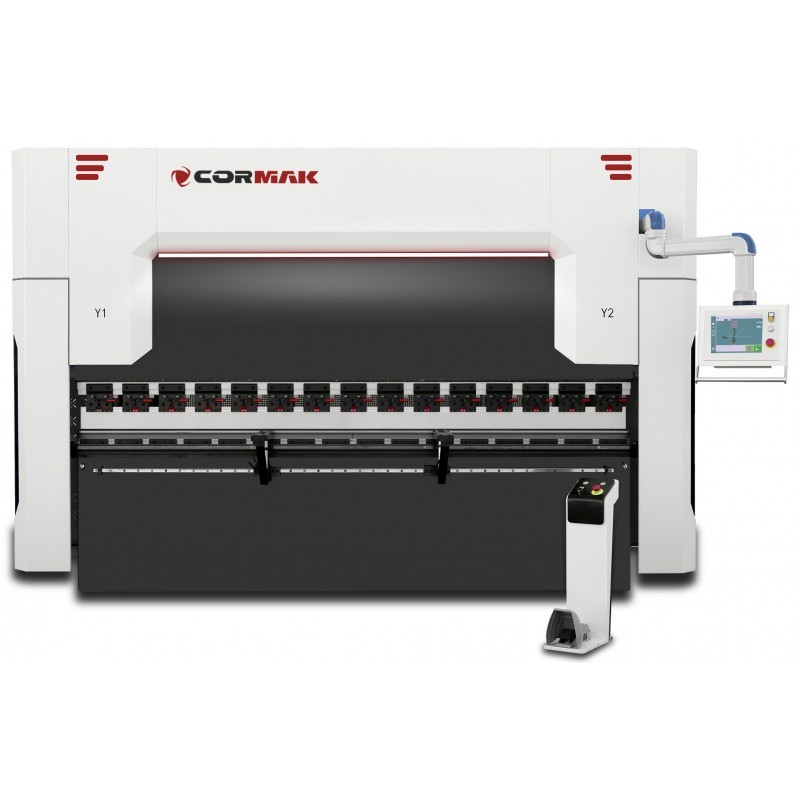
A hydraulic press is a versatile piece of equipment used in workshops, service centres, tool rooms and manufacturing plants. It is ideal for pressing in bearings, fitting sleeves, extracting pins, straightening shafts, correcting metal components and carrying out a wide range of repair work. The capabilities of the machine are primarily determined by its maximum pressing force, which is usually specified in tonnes.
A hydraulic press is a versatile piece of equipment used in workshops, service centres, tool rooms and manufacturing plants. It is ideal for pressing in bearings, fitting sleeves, extracting pins, straightening shafts, correcting metal components and carrying out a wide range of repair work. The machine’s capabilities are primarily determined by its maximum pressing force, which is usually specified in tonnes.
Selecting the right model should not be based solely on choosing the machine with the greatest force. The press must be suited to the actual tasks, the dimensions of the workpieces, the frequency of use and the required precision of operation. A machine that is too weak may not be able to handle the planned operation, whilst a significantly oversized model will be more expensive, larger and often less convenient for small, precision work.
What does the ‘pressure’ of a hydraulic press mean?
Press force refers to the maximum force that the piston can exert on the workpiece. This force is generated by the hydraulic system, in which oil pressure is converted into the working motion of the cylinder. The larger the cylinder bore and the higher the pressure in the system, the greater the force the machine can generate.
In practice, it is not advisable to regularly operate at the very limits of the machine’s capacity. If a particular operation requires around 20 tonnes, a 30-tonne model would be a more sensible choice. This margin reduces the risk of overloading the structure and the hydraulic system, whilst also making it easier to work with seized, corroded or tightly fitted components.
It is worth remembering that nominal pressure is just one of the parameters. Equally important are the stability of the frame, the quality of the guide system, the range of table adjustment, the piston stroke and the ability to position the workpiece in line with the pressing axis. Even a powerful press will not deliver good results if the component is poorly supported or positioned at an angle.
What pressure is required for typical workshop tasks?
A 10–20-tonne hydraulic press is often sufficient for pressing in and out smaller bearings, bushings, pins and automotive components. This range is suitable for service centres, mechanical workshops and for light or moderately demanding repairs.
If you require a more versatile press, it is worth considering a model with a capacity of around 30 tonnes. This allows you to work with larger bearings, straighten medium-sized shafts, remove more firmly seated components and handle a wider range of tasks without operating at the machine’s limits.
Hydraulic presses with a pressure of around 50 tonnes are designed for larger machine parts, thicker sections, structural components and more intensive use. 100-tonne models and larger are primarily used in industry, for large components, heavy structures and tasks requiring very high pressing force.
Straightening and bending of metal components
During straightening, the force required depends on the type of material, the cross-section of the workpiece, the distance between the supports and the extent of the deformation. A small flat bar requires significantly less pressure than a thick shaft, a solid pin or a structural section. The pressure should be increased gradually, whilst regularly checking the geometry of the component.
A hydraulic press can also be used for occasional bending of sheet metal, flat bars and rods. The force required in such cases depends on the thickness of the material, the length of the bend, the bend radius and the width of the die. For the mass production of bent long sheets, however, a press brake—which is specifically designed for this process—is a better solution.
When straightening and bending, it is very important to support the workpiece evenly. The material should be positioned securely, and the force should act as axially as possible. Working with a workpiece positioned at an angle increases the risk of slippage, tool damage or structural overload.
Not just the pressing force
Before purchasing a press, one should check not only the maximum pressure but also the dimensions of the working area. The width between the columns, the maximum distance between the ram and the table, and the working stroke are of key importance. Even a high pressing force will be of no use if the workpiece does not fit inside the machine or cannot be properly supported.
An adjustable work table is very important. The ability to change its height makes it easier to adapt the press to different workpieces and reduces set-up time. A pressure gauge is also useful, as it allows you to monitor the current pressure and work more predictably.
In many workshops, a press with a movable cylinder works well. It allows the piston to be positioned over a specific point on the workpiece without having to move the entire workpiece. With larger and heavier parts, this is a great help and a way to work more safely.
Manual, foot-operated or electro-hydraulic?
For simple and occasional jobs, a manual press is sufficient. It is straightforward, inexpensive to operate and works well for the occasional pressing or extrusion of components.
A foot-operated pump improves ergonomics as it leaves the operator’s hands free. This is important when you need to simultaneously control the positioning of the workpiece, its support and the movement of the piston.
Electro-hydraulic presses are more convenient for larger quantities of workpieces and intensive use. They streamline the work, reduce the operator’s effort and are well-suited to workshops where the press is used regularly throughout the day.
The most common mistakes when choosing a press
One of the most common mistakes is purchasing a press with insufficient pressing force. Initially, it may seem adequate, but with larger bearings, corroded pins or stiffer components, it will quickly prove to be a limitation.
A second mistake is focusing solely on tonnage. The user selects a more powerful press but fails to check the space between the columns, the piston stroke, the working height and the table’s adjustment capabilities. As a result, the machine has sufficient force but is unsuitable for the actual workpieces.
The third problem is a lack of working margin. A press used constantly at the limits of its capacity will be under greater strain, and the operator will have less control over the process. In a workshop, it is better to choose a model with a reasonable margin than to work constantly at maximum pressure.
Safety and operation
A hydraulic press is a machine that generates a great deal of force; therefore, the workpiece must be securely supported and the piston positioned as axially as possible. Do not use random shims, damaged pins or components that may break under load.
Hoses, connections, table pins, the pressure gauge, the pump and the oil level all require regular checks. It is also worth checking that the frame shows no visible deformation and that the table locks securely at the selected height. Good maintenance improves safety and helps maintain consistency in operation.
Summary
A 10–20-tonne hydraulic press is usually sufficient for basic maintenance tasks. A 30-tonne model will be more versatile, whilst a 50-tonne machine is better suited to larger parts, heavier work and more demanding operations. Presses of 100 tonnes and above are primarily intended for industrial applications.
When selecting a machine, one should take into account not only the maximum pressing force, but also the size of the workpieces, the piston stroke, the working space, the control method and the frequency of use. A suitably selected hydraulic press improves safety, reduces repair times and facilitates the precise machining of metal components.
