

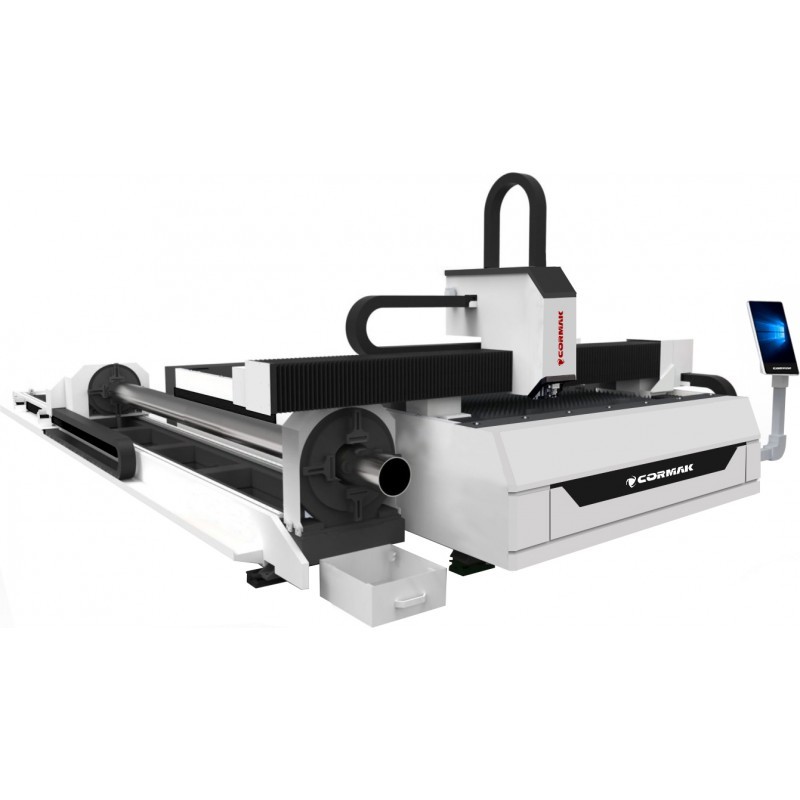
Should you choose a laser cutting machine or a plasma cutter for sheet metal production? Laser cutting provides precise contours and can reduce finishing work, while plasma cutting may be economical for thicker structural components. Compare materials, thicknesses, tolerances, edge quality and total cost per finished part.
Choosing between a laser cutting machine and a plasma cutting machine starts with three questions: which metal will you cut most frequently, how thick is it, and what dimensional tolerances must the finished part meet? These factors provide a more reliable basis for deciding than general claims about either technology.
Both technologies are effective in manufacturing, but they differ in edge quality, speed across different material thicknesses, initial investment and running costs. Fibre laser cutting is valued for accurate contours and repeatability. Plasma can be economical for thicker structural components that will subsequently be welded. Compare enclosed FIBER laser cutting machines with CNC plasma cutting tables against actual production requirements.
Material – what do you cut most frequently?
A FIBER fibre laser can cut a wide range of metal sheets, including mild steel, stainless steel and aluminium, provided the source power and assist gas are appropriate. Typical applications include enclosures, panels, mounting components and parts intended for subsequent bending. Check the permitted metals and thicknesses for the specific laser source and cutting head.
Plasma cutting requires electrically conductive material. The process is used for structural steel, stainless steel and aluminium, as well as frames, brackets and machine bases. Where components will be welded later, a less refined cut edge may not be a significant disadvantage.
Do not assume every machine can cut every alloy equally well. Thermal conductivity, reflectivity, process settings and the manufacturer's recommendations affect the results. When processing different metals, prepare representative samples and compare trial cuts.
Sheet thickness and productivity
For thin sheets and many medium thicknesses, laser cutting often combines high speed with a narrow kerf and accurate contours. It works well for multiple holes, small cut-outs and tight radii. One example is the FIBER LF3015C laser, designed for processing sheets within a 3000 × 1500 mm working area.
Plasma may be attractive for thicker material and structural parts, particularly where an exceptionally narrow kerf is unnecessary. However, there is no universal thickness above which plasma always wins: powerful industrial lasers can also cut thick steel. Performance depends on source power, required edge quality, process gas, piercing and the production arrangement.
Distinguish the maximum thickness a machine can sever from the thickness it can cut at the required quality and productivity. Measure the time needed for an entire job rather than merely the cutting speed along a straight line.
Tolerances and dimensional accuracy
If parts need accurate mounting holes, must fit with other components or go directly for bending, laser cutting generally offers better precision and repeatability. The narrower kerf supports small, complex geometries. Actual tolerances still depend on the machine, material and cutting parameters.
For welded structures and parts with more generous dimensional tolerances, CNC plasma may deliver sufficient accuracy at a lower cost. Modern plasma systems can also produce repeatable results and should not be confused with less controlled manual cutting.
Cut edge quality and secondary processing
Laser cutting generally produces a narrower kerf and cleaner edges, potentially reducing deburring and grinding before assembly, painting or bending. That does not guarantee completely burr-free cutting. Assist gas, nozzle condition, focus position, material thickness and programming all affect quality.
After plasma cutting, slag removal or edge correction is more frequently needed, particularly for parts with demanding visual requirements. If a component will be welded or machined anyway, additional finishing may be acceptable. Compare the total time and quality of the completed part rather than its appearance immediately after cutting.
Investment and operating costs
A plasma system generally has a lower initial purchase cost than an industrial FIBER laser and may be attractive for steel fabrication workshops. Laser machinery usually requires a higher investment, but for repeatable precision parts it can reduce finishing operations, material waste and unit cost.
Include programming, nesting, piercing, cutting time, electricity, assist gas or compressed air, consumables, fume extraction, operator time and subsequent grinding. The cost per component can differ considerably between one large structural part and a batch of hundreds of small components.
Both processes require suitable guards, ventilation and safe procedures. Laser equipment needs protection against radiation and reflections, while plasma cutting produces arc radiation, noise, fumes and sparks. Safety equipment and maintenance must be included in the financial calculation.
When should you choose laser cutting?
A laser cutting machine is well suited to thin and medium sheets, precise contours, numerous holes and components requiring attractive edges. Typical applications include enclosures, panels, parts intended for bending and production batches where secondary finishing time has a substantial impact on cost.
For demanding production, the FIBER 3015P fibre laser can be considered alongside alternative source powers and table configurations. Select the laser power according to metals, planned thicknesses and the required number of parts per shift rather than simply choosing the largest available rating.
When should you choose plasma cutting?
A plasma cutting machine can be suitable for thicker sheet metal and parts destined for welding when tolerances and edge appearance are less demanding. It may be an economical option for fabrication shops, repair businesses and manufacturers of frames or supports.
When selecting a power source, check the rated quality-cut thickness, maximum severance thickness, duty cycle and compatibility with CNC control. Compare plasma cutting power sources alongside the requirements for the cutting table, torch and compressed-air supply.
Summary
Neither technology is best for every company. Laser often has the advantage where tight tolerances, complex geometries and minimal finishing are important. Plasma may be more economical for thick structural parts with less demanding requirements. Businesses producing a wide variety of components may benefit from both methods.
Before investing, collect representative part drawings, materials, thicknesses and required tolerances. Compare trial cuts, the complete production time and actual operating costs. The choice should follow your manufacturing requirements rather than the simplified idea that laser is only for precision and plasma only for thick metal.
