


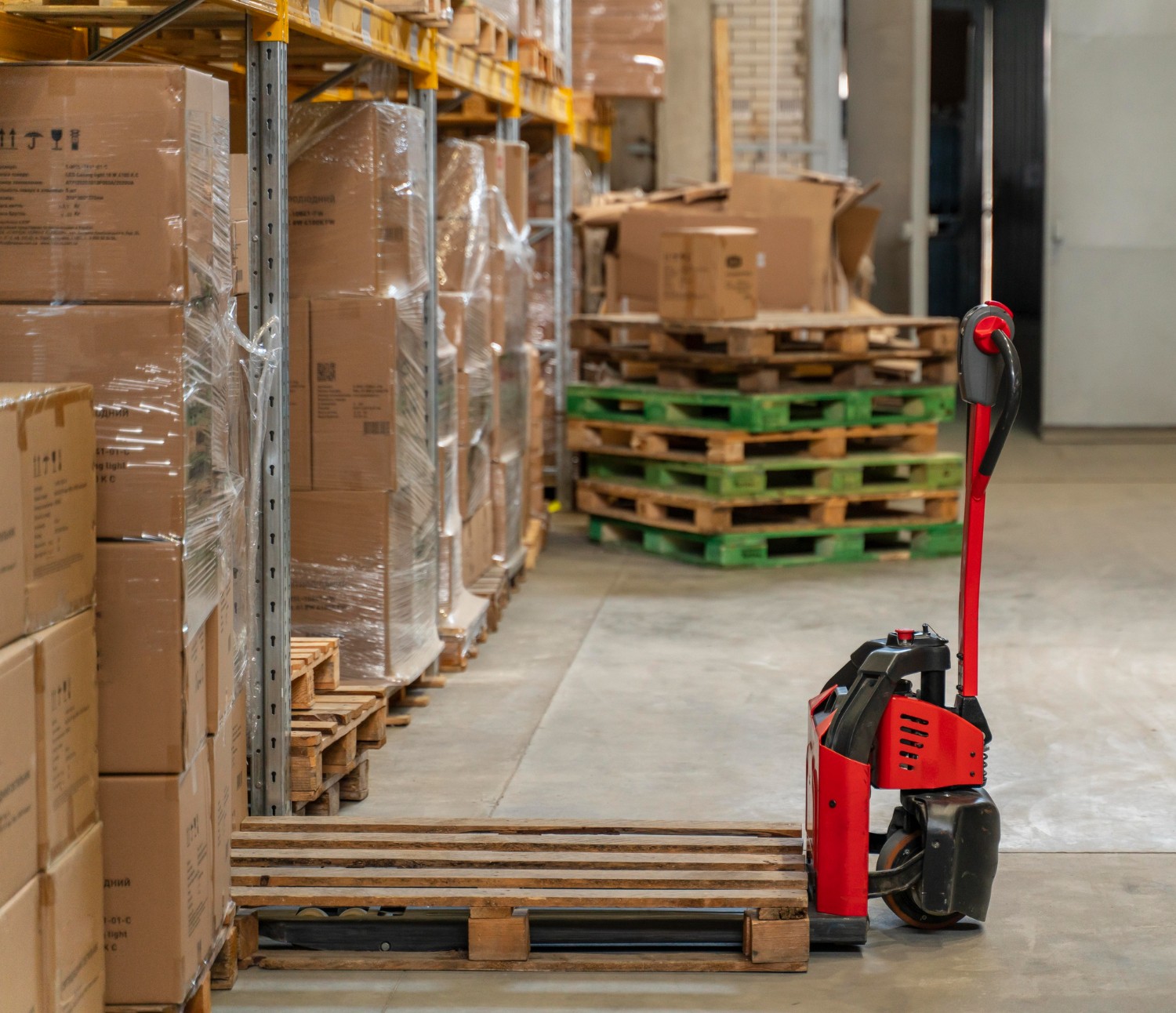
Pallet stacking plays a vital role in the organisation of logistics processes, directly affecting the efficiency of warehousing and transport. Stacking load units correctly not only maximises space utilisation but also improves workplace safety and reduces the risk of damage to goods. In practice, stacking pallets loaded with goods requires knowledge of technical principles, the correct selection of equipment and consideration of the specific characteristics of the products being transported.
Pallet stacking plays a vital role in the organisation of logistics processes, directly affecting the efficiency of warehousing and transport. Stacking load units correctly not only maximises space utilisation but also improves workplace safety and reduces the risk of damage to goods. In practice, stacking pallets loaded with goods requires knowledge of technical principles, the correct selection of equipment and consideration of the specific characteristics of the products being transported.
Contents
- Pallet stacking – basics and importance in logistics
- Pallet stacking in the warehouse – principles and safety
- Pallet stacking in transport and on a trailer
- Equipment to support pallet stacking
- Space optimisation through pallet stacking
- Summary
Pallet stacking – basics and importance in logistics
Pallet stacking is one of the fundamental logistics operations, enabling the maximum utilisation of available storage and transport space. In practice, stacking pallets loaded with goods involves arranging load units on top of one another in a stable and safe manner. This makes it possible to increase storage efficiency and reduce transport costs. It is important to understand that pallet stacking is not the same as randomly arranging a load – it requires knowledge of the goods’ specifications, the load-bearing capacity of the pallets and health and safety regulations. In the context of logistics, the term ‘pallet stacking’ also frequently arises – what does this mean? It refers to the organised arrangement of load units into stacks in accordance with specific technical and safety standards.
Pallet stacking in the warehouse – rules and safety
Stacking pallets in a warehouse should be carried out in accordance with specific procedures that take into account both the type of goods and the design of the racking and flooring. Stability is of key importance – each layer must be properly levelled, and the weight distributed evenly. Stacking pallets with goods also requires taking into account the maximum storage height to avoid the risk of the stack toppling over. In modern warehouses, this process is supported by equipment such as forklift trucks and mast-type pallet trucks, which enable precise and safe handling of loads. For heavier loads, a pallet stacker is also used, which significantly increases work efficiency and reduces the risk of operator error.
Stacking pallets during transport and on a trailer
Stacking pallets during transport requires even greater precision than in a warehouse, as the load is exposed to movement and vibrations. Stacking pallets on a trailer must take into account not only stability but also the even distribution of weight across the entire surface of the vehicle. In practice, this means that safety measures such as transport straps, anti-slip mats or spacers must be used. Stacking pallets with goods during transport should be planned in advance to prevent the load from shifting whilst the vehicle is in motion. It is also worth bearing in mind that not all goods are suitable for stacking – in the case of sensitive products, it may be necessary to limit the number of layers. However, proper preparation of the process can significantly increase transport efficiency and reduce the number of journeys.
Equipment to support pallet stacking
Modern logistics cannot function without the appropriate technological infrastructure. Today, pallet stacking is largely automated or supported by specialised solutions. Warehouse machinery and handling equipment play a key role here, enabling fast and safe operations on a large scale. Depending on requirements, both traditional forklift trucks and more advanced automated systems are used. It is worth emphasising that appropriately selected equipment not only speeds up the stacking of pallets of goods, but also minimises the risk of damage and improves the ergonomics of operators’ work. In the context of the development of industrial enterprises, it is also important to collaborate with an experienced manufacturer of industrial machinery who provides solutions tailored to the specific nature of a given sector.
Space optimisation through pallet stacking
Efficient pallet stacking allows for the maximum utilisation of available space both in the warehouse and during transport. With proper planning, it is possible to increase storage capacity without the need to expand the infrastructure. Stacking pallets in the warehouse and during transport directly contributes to reducing operating costs and improving work organisation. However, it is crucial to tailor the strategy to the type of goods, storage conditions and available equipment. In practice, this means analysing logistics processes and implementing solutions that ensure safety and efficiency.
Summary
Pallet stacking forms the foundation of the efficient operation of warehouses and transport, enabling optimal use of space and a reduction in operational costs. Both pallet stacking in the warehouse and during transport require adherence to specific rules and the use of appropriate tools. The implementation of modern solutions and equipment helps to increase productivity, improve workplace safety and minimise losses resulting from damage to goods. It is therefore worth treating pallet stacking as a key element of any modern company’s logistics strategy.
