


Compressed air is used not only in large manufacturing plants, but also in smaller workshops and domestic garages. Powering pneumatic wrenches, paint spray guns, jacks and cleaning equipment requires a suitably prepared infrastructure. A well-designed compressed air system improves working comfort, ensures user safety and extends the service life of the connected tools. It is therefore worth knowing the basic principles of designing a compressed air system, what components it should consist of, and what to look out for during its installation.
Compressed air is used not only in large manufacturing plants, but also in smaller workshops and domestic garages. Powering pneumatic wrenches, paint spray guns, jacks and cleaning equipment requires a suitably prepared infrastructure. A well-designed compressed air system improves working comfort, user safety and the durability of the connected tools. It is therefore worth knowing the basic principles of designing a compressed air system, what components it should consist of, and what to look out for during its installation.
Contents
- Why is it worth installing a compressed air system?
- What does a compressed air system consist of?
- Principles of designing a compressed air system
- Step-by-step guide to installing a compressed air system
- Compressed air system in a garage – what to bear in mind?
- Compressed air system in a workshop – solutions for professionals
- The importance of drying and storing compressed air
- Summary
Why is it worth installing a compressed air system?
A modern compressed air system significantly streamlines day-to-day work. Thanks to it, there is no need to connect the compressor directly to a specific tool every time. The air is supplied to selected outlets positioned at key points throughout the workshop or garage.
A properly installed compressed air system in a workshop improves working ergonomics, minimises pressure losses and allows several tools to be used simultaneously. For larger premises, it is worth opting for high-performance industrial compressors.
What does a compressed air system consist of?
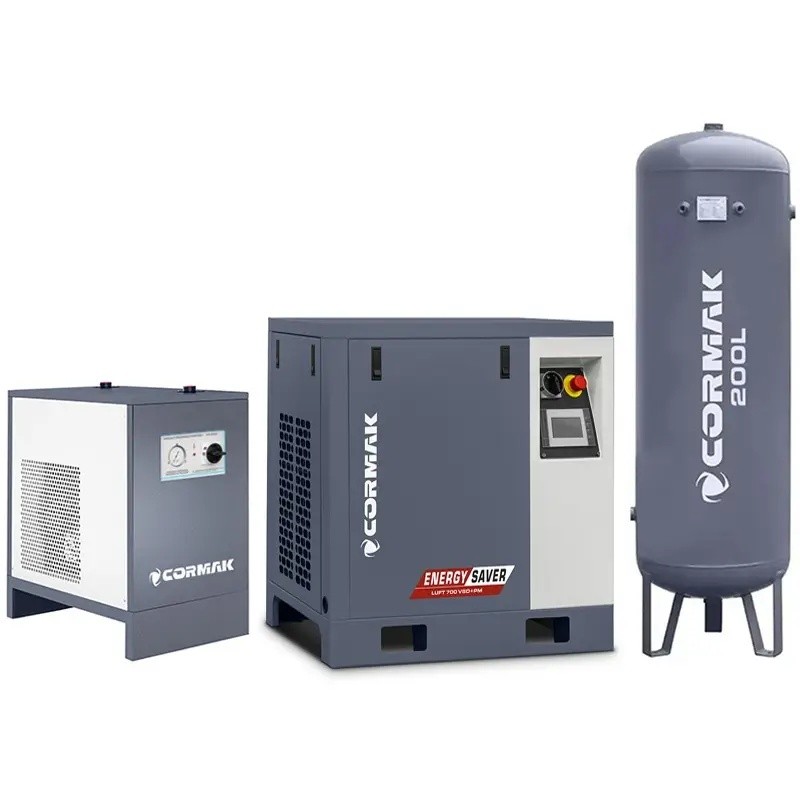
The basis of the system is the compressed air source. Depending on requirements, these may be conventional piston compressors or more advanced screw compressors, which are well-suited to intensive use.
A complete compressed air system also comprises:
- a compressor,
- a storage tank,
- a dryer,
- a pipework distribution system,
- shut-off valves,
- tap-off points,
- filters and condensate separators.
In many cases, a screw compressor with a receiver proves to be a good solution, as it helps to minimise the space required and simplify the configuration of the entire system.
Principles of compressed air system design
Proper design of a compressed air system should begin by determining the air demand. The number of consumers, their consumption rates and the possibility of several units operating simultaneously must be taken into account.
The most important factors influencing the design principles of a compressed air system include:
- the correct selection of pipe diameters,
- minimising pressure drops,
- the correct positioning of supply points,
- the potential for future system expansion,
- effective condensate drainage.
Professional design of compressed air systems also takes the routing of the pipes into account. It is recommended that they be laid with a slight downward gradient, which facilitates the removal of moisture from the system. In the case of larger facilities, ring systems are often used to ensure an even flow of the medium.
Step-by-step installation of a compressed air system
Proper installation of a compressed air system should be preceded by the preparation of a detailed layout plan for all system components. First, the compressed air source is installed, together with the storage tank and the treatment system.
Next, the pipework network is laid out. The compressed air system can be constructed using aluminium, steel or plastic pipes designed for use under pressure. Each solution has its advantages, but the correct execution of the connections is of key importance.
The final stage involves a leak test and the adjustment of operating parameters. Careful installation of the compressed air system helps to avoid costly leaks, which can result in significant energy losses.
Compressed air system in the garage – what should you bear in mind?
A well-planned compressed air system in a garage enhances the functionality of a home workshop. Even amateur car maintenance or DIY tasks become much more convenient.
In the case of small spaces, particular care should be taken to arrange the equipment compactly. Appropriately selected compressor tanks also play a key role, as they help stabilise pressure and reduce the frequency with which the compressor switches on.
Compressed air systems in workshops – solutions for professionals
A professional compressed air system in a workshop must meet the higher demands associated with the intensive use of pneumatic tools. Under such conditions, the appropriate capacity of the compressed air source becomes particularly important.
A well-designed compressed air system increases operational efficiency and minimises downtime caused by insufficient pressure. This is precisely why the design of a compressed air system should take into account not only current needs but also planned business growth.
It is worth bearing in mind that a reputable manufacturer of industrial machinery can provide comprehensive support in selecting the appropriate equipment.
The importance of drying and storing compressed air
Moisture present in the system can lead to corrosion of pipework and damage to tools. This is why it is so important to use appropriate air treatment systems.
A good solution is a compressor air dryer, which effectively removes excess moisture from the system.
Anyone wondering why a compressor needs a dehumidifier should read our expert guide. Proper air preparation ensures the reliability of the entire system.
Summary
Whether you’re planning a compressed air system for a garage or a more extensive setup in a workshop, proper preparation and the selection of the right components are crucial. Professional design of the compressed air system, knowledge of installation principles and careful fitting all influence the safety, efficiency and running costs of the entire system. A well-planned compressed air system is an investment that quickly translates into greater working comfort and better utilisation of the capabilities of pneumatic equipment.
