


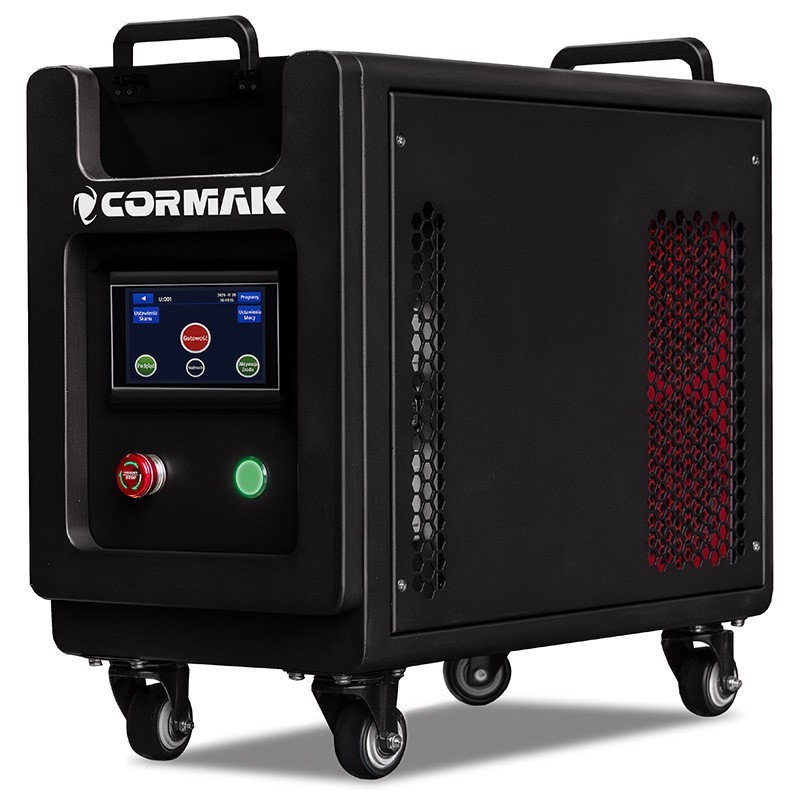
Proper surface preparation has a direct impact on the quality of the weld, the adhesion of paint coatings and the durability of the finished component. Even the best paint, varnish, powder coating or welding technology will not deliver the desired result if rust, scale, oil, grease, dust or residues of old coatings remain on the material.
Proper surface preparation has a direct impact on the quality of the weld, the adhesion of paint coatings and the durability of the finished component. Even the best paint, varnish, powder coating or welding technology will not deliver the desired result if rust, scale, oil, grease, dust or residues of old coatings remain on the material.
Laser cleaning is a modern method of preparing metal for further processing. It allows selected layers of contaminants to be removed in a targeted, controlled manner without the use of abrasives. However, the final result depends on the type of material, the type of laser, the operating parameters, the quality requirements and the inspection of the surface after cleaning.
What is laser cleaning?
Laser cleaning involves directing a concentrated beam of light onto a layer of contamination. The laser energy causes ablation – that is, the vaporisation, fragmentation or detachment of contaminants from the base material. Depending on the settings, it is possible to remove rust, paint, oxides, scale, greases, oils, production deposits and residues from previous processing.
The greatest advantage of this technology is process control. The operator can clean a precisely selected area without having to process the entire component. This is important for welding, refurbishment, edge preparation, cleaning parts with complex geometries, and for components that should not be subjected to excessive mechanical abrasion.
However, the laser does not automatically guarantee a perfect surface. Before implementation, it is necessary to determine what result is required: a clean welding zone, rust removal, preparation for painting, cleaning without altering the surface roughness, or surface preparation in accordance with a specific specification.
Laser cleaning prior to welding
Before welding, the surface should be free from contaminants that could disrupt arc stability, impair fusion or cause weld defects. Rust, paint, oil, moisture, oxides, dust and grease can lead to porosity, spatter, lack of fusion, an irregular weld face and a weakened joint.
A laser cleaner allows you to prepare precisely the area that is to be welded. You can clean edges, areas around joints, spot-welded areas and zones where corrosion or old coatings were previously present. This is particularly useful for steel structures, machine components, profiles, pipes, tanks and parts made of stainless steel and aluminium.
In the case of aluminium, it is particularly important to remove dirt and oxide layers. With stainless steel, it is important to avoid contamination from carbon steel, which can reduce the surface’s corrosion resistance. For structural steel, the laser can help remove rust, scale and paint residues from the area where the weld is to be made.
A well-prepared surface facilitates a more stable process, fewer reworks and a more predictable joint quality. However, it does not replace the correct selection of welding parameters, shielding gas, filler material, workpiece clamping or qualified technology, where required.
Laser cleaning prior to powder coating and painting
Preparation for painting requires the removal of layers that may reduce the adhesion of the coating. Any remaining rust, loose scale, old paint, grease or dust can cause flaking, cracking, blistering, corrosion spots and premature delamination of the coating.
Laser cleaning enables the removal of contaminants without the use of abrasives and without flooding the component with chemicals. In many applications, it prepares the metal for further processes, such as powder coating, varnishing, the application of protective coatings or bonding.
When painting, it is not only visual cleanliness that is important, but also the appropriate surface texture and compliance with the requirements of the coating technology. In some processes, it may be necessary to achieve a specific surface roughness, degreasing, dust control, an adhesion test or an additional preparation stage. Therefore, the laser should be regarded as a highly precise surface preparation tool, but not as a substitute for quality control.
Why choose a laser over traditional methods?
Grinding, brushing, sandblasting and chemical treatments still have their place in industry, but they are not always the best choice. Mechanical methods can cause scratches, uneven abrasion, dust generation and wear and tear on consumables. Sandblasting requires an abrasive and appropriate workplace organisation. Chemical methods require monitoring of residues, neutralisation and disposal.
Laser cleaning stands out because it allows for selective and precise operation. It requires no abrasive, reduces secondary waste and can be applied to specific areas. In a well-designed process, it helps to preserve the part’s geometry, reduce manual processing and improve the repeatability of surface preparation.
The benefits are particularly evident for components that are cleaned regularly, have repeatable geometry or require control over the base layer. In the case of very large surfaces, thick coatings or specific roughness requirements, the choice of technology should be based on trials and a comparison of the entire process.
How do you achieve a properly prepared surface?
The ‘ideal’ surface does not always mean the same thing. Before welding, the most important thing is to remove contaminants from the joint area and ensure stable process conditions. Before painting, what matters is cleanliness, adhesion, the absence of loose layers, and compliance with the paint or varnish manufacturer’s requirements.
To achieve a good result, it is worth following a few steps:
- Identify the base material – carbon steel, stainless steel and aluminium react differently to laser energy.
- Identify the type of contamination – a light film requires a different approach to old paint, grease, scale or heavy rust.
- Carry out a test run – preferably on a scrap piece or an inconspicuous area of the workpiece.
- Select the parameters – power, feed rate, scan width, frequency, number of passes and working distance.
- Inspect the result – the surface should be free from loose layers, dust, grease and visible dirt residues.
For demanding coatings or critical welded joints, follow the standards and procedures in force at your workplace. Visual inspection alone may not be sufficient.
How should the parameters of a laser cleaner be selected?
There is no single setting suitable for all surfaces. Energy levels that are too low may fail to remove contaminants, whilst overly aggressive parameters may overheat the surface, cause discolouration, alter the structure of the surface layer or leave processing marks.
The most important parameters are:
- laser power – affects the rate at which contaminants are removed and the amount of energy delivered to the surface;
- operating mode – pulsed lasers are often chosen for precision cleaning, whilst CW lasers are used for more intensive work on larger surfaces;
- head feed rate – determines the duration of the beam’s exposure to a given section;
- scan width – allows the working area to be adapted to the shape of the workpiece;
- number of passes – sometimes several gentler passes yield better results than a single very aggressive one;
- working distance and head positioning – these influence the uniformity of cleaning and the safety of the process.
The selection of parameters should take into account not only the speed of operation but also the requirements of subsequent processes: welding, painting, bonding, quality control or assembly.
Surface inspection after cleaning
After laser cleaning, it is worth checking whether the surface actually meets the requirements of the subsequent process. For welding, the cleanliness of the joint area, the absence of grease, loose oxides and coating residues are crucial. For painting, dust, moisture, surface roughness and coating adhesion are also important factors.
The scope of inspection may include:
- visual assessment of the surface;
- testing for the presence of dust or loose residues;
- degreasing inspection;
- measurement of surface roughness, if required by the coating process;
- a welding test or a coating adhesion test on a sample.
Inspection helps to avoid situations where a surface looks good but does not meet the technical requirements. This is particularly important for components operating in harsh conditions, structures exposed to corrosion, and mass production.
Laser cleaning for welding and painting – a comparison of objectives
| Application | Main objective | What to inspect? |
|---|---|---|
| Before welding | Removal of contaminants from the joint area | No rust, paint, oil, loose oxides or moisture |
| Before painting | Improving surface cleanliness and coating adhesion | No loose layers, dust, grease or flaking old coating |
| Renovation of components | Removal of contaminants with minimal interference with the component | Uniform results, no overheating and preservation of geometry |
The most common errors in laser surface preparation
- Failure to carry out a test run – settings chosen ‘by eye’ may be too mild or too aggressive.
- Treating every material the same – aluminium, carbon steel and stainless steel require different approaches.
- Omitting degreasing – for certain types of contamination, additional preparation before or after cleaning may be necessary.
- Lack of post-process inspection – a surface that appears clean to the naked eye is not always ready for a demanding coating.
- Excessively aggressive parameters – these can cause discolouration, overheating or undesirable changes to the surface.
- Lack of extraction and safety measures – fumes, dust and laser radiation reflections are generated during cleaning.
Health and safety during laser cleaning
Laser cleaning machines, particularly high-power units, require the workstation to be properly organised. Eye protection suitable for the wavelength and parameters of the machine must be worn; bystanders must be prevented from entering the work area; and the risk of beam reflections from metal surfaces must be minimised.
It is also important to have a dust extraction system. Removed rust, paint, oils and coatings can produce dust and fumes which should not be inhaled. The workstation should be equipped with effective ventilation or extraction, and the operator should work in accordance with the manufacturer’s instructions and the risk assessment.
Summary
Laser cleaning is an effective method for preparing metal for welding, powder coating and painting. It allows rust, paint, oxides, scale, greases and deposits to be removed without the use of abrasives and with a high degree of control over the treatment area.
Prior to welding, the laser helps to clean the joint area and reduce the risk of weld defects. Prior to painting, it can improve surface cleanliness and prepare the surface for further coating treatment. However, the best results are achieved only through a combination of the correct parameters, technical trials, surface inspection and safe workplace organisation.
A well-chosen laser cleaner can reduce component preparation time, improve process repeatability and minimise waste. It provides practical support for companies seeking to achieve a clean, stable and predictable surface prior to the next stage of production.
