


Cutting timber into planks requires both proper preparation of the raw material and the right choice of equipment. In practice, it is the equipment that determines the precision and efficiency of the process. Therefore, when planning how to cut timber into planks, it is worth understanding the differences between the various machines and processing techniques. There are many solutions available on the market for joinery workshops, sawmills and professional workshops.
Cutting timber into planks requires both proper preparation of the raw material and the right choice of equipment. In practice, it is the equipment that determines the precision and efficiency of the process. Therefore, when planning how to cut timber into planks, it is worth understanding the differences between the various machines and processing techniques. There are many solutions available on the market for joinery workshops, sawmills and professional workshops.
- What machines are needed to cut timber into planks?
- Techniques for cutting timber into planks – the basics
- Safety when cutting timber
- Summary
What machines are needed to cut timber into planks?
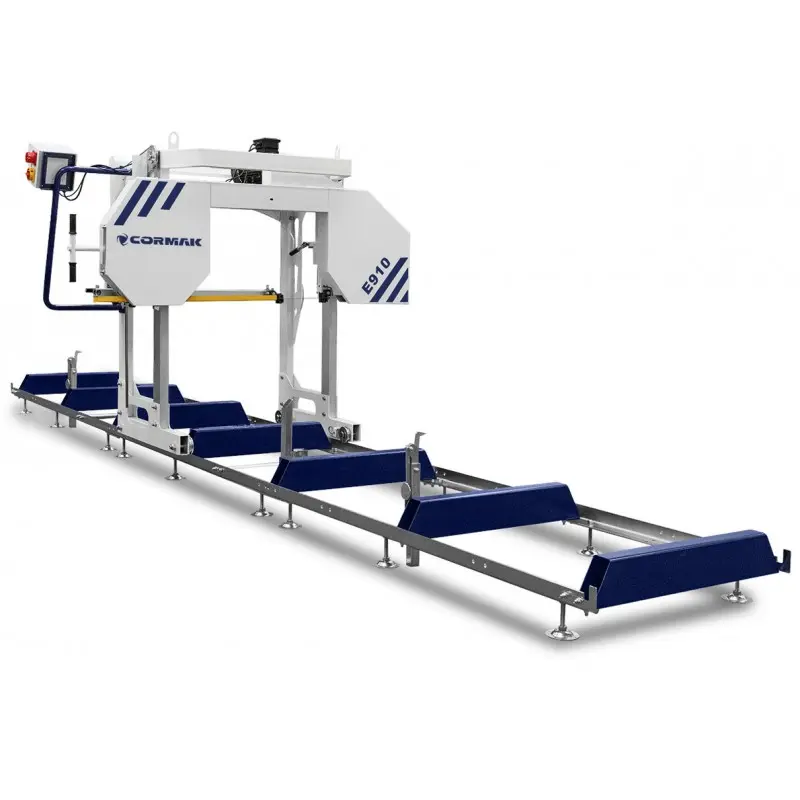
The backbone of any sawmill is the timber saws, which enable stable, repeatable and efficient cutting of logs into planks. This is the first and most important machine for cutting timber into planks, allowing for the production of raw, unprocessed structural or joinery components. The next stage involves achieving precise dimensions and finishing the surface. For this, panel saws are used, offering high accuracy when cutting components.
In further processing, equipment for levelling and smoothing surfaces also remains extremely important. Planer-thicknessers and levellers enable the boards to be given the correct thickness, straightness and smoothness, preparing them for their final applications.
A comprehensive overview of the equipment is provided by the industrial machinery manufacturer Cormak. The available woodworking machines offer a wide range of technologies that can be tailored to the type of production and the planned scale of operations.
Techniques for cutting timber into boards – the basics
The process of cutting timber into boards should begin with an assessment of the raw material’s quality and moisture content. Timber that is too wet may warp during drying, which is why preliminary seasoning is often carried out. The logs are then placed on the stable bed of the saw, with the cutting thickness selected according to the intended use. The choice of technique depends on the timber species, the log’s diameter and the desired result – different approaches work for structural elements and for joinery materials.
Once the initial semi-finished boards have been produced, they must be cut to size, levelled and calibrated to achieve uniform dimensions. At this stage, panel saws and planer-thicknessers are often used to precisely smooth the surface.
Safety when cutting timber
Whether using a professional machine for cutting timber into boards or smaller workshop equipment, health and safety rules are of paramount importance. Guards, stable feeders, non-slip gloves and safety goggles must be used, and the technical condition of the machines should be checked regularly. Proper organisation of the workspace significantly affects the comfort and safety of work.
Summary
Cutting timber into planks correctly requires both technical expertise and access to machinery suitable for working with various types of timber. In practice, it is the combination of high-performance sawmills, precision saws and planing equipment that determines the quality of the finished product. By utilising the solutions offered by Cormak as a manufacturer of industrial machinery, it is possible to create a professional and efficient production process, tailored to market requirements and the specific characteristics of a given plant.
