


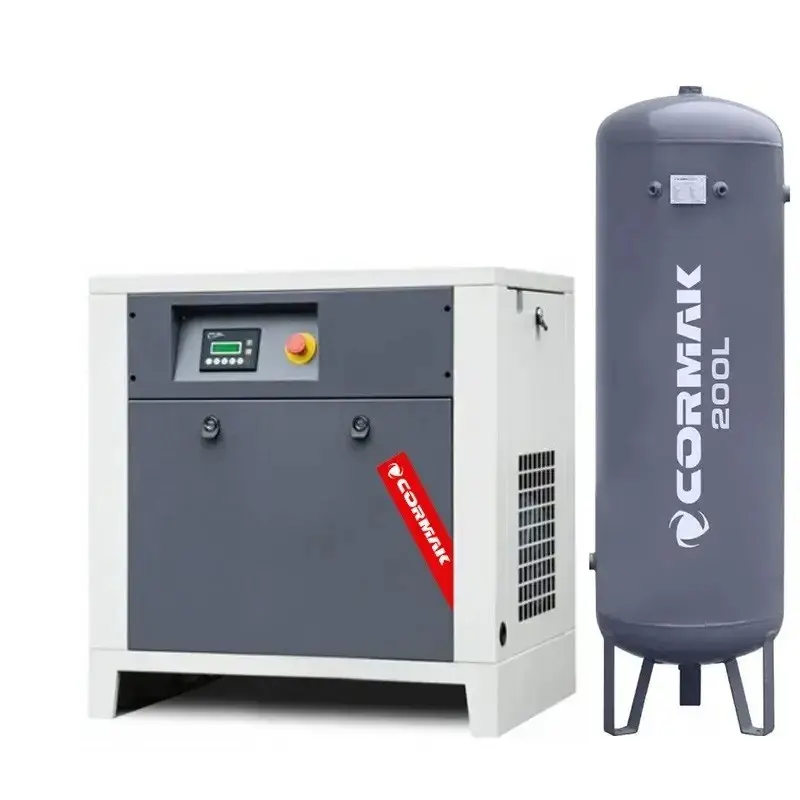
Are you wondering how a screw compressor works and what it looks like, how this type of equipment is constructed, and where it is used? In industries where reliability and high efficiency are important, screw compressors are commonly used to power a variety of pneumatic devices. Screw compressor – the principle of operation is based on a precise design and continuous pumping of compressed air without pulsation, which translates into stable operation of production systems. Understanding how a screw compressor works allows you to better match its parameters to the specific characteristics of your plant.
Wondering how a screw compressor works and looks, how it's built, and where it’s used? In industries where reliability and high work efficiency matter, screw compressors are commonly used to power a wide range of pneumatic devices. Screw compressor – operating principle is based on a precise design and continuous compression of air without pulsation, ensuring stable performance of production systems. Understanding how a screw compressor works helps to better match its parameters to the plant’s specifics.
What will you read about?
- Screw compressor – how does it work and what makes it efficient?
- Screw compressor – construction and key components
- How does a screw compressor work in practice?
- Applications and selection of a screw compressor
- Why choose screw compressors from Cormak?
Screw compressor – how does it work and what makes it efficient?
The device operates on a mechanism based on two intermeshing screw rotors. As the rotors turn, air is drawn in and gradually compressed in the inter-screw spaces until the required pressure is reached. This process ensures smooth compression with significantly lower vibration and noise levels than piston compressors. The high performance of a screw compressor results from its continuous, uninterrupted operation – it can run for many hours without overheating risk.
Screw compressor – construction and key components
The exact construction of a screw compressor determines its reliability. The unit consists of several core components:
- two precisely manufactured screw rotors,
- a compression housing ensuring optimal sealing,
- a lubrication and cooling system,
- an oil separator and air filter to ensure clean compressed air,
- an electronic control system.
Both the design of the screw compressor and the use of modern cooling systems are essential for component durability. The precise construction of a screw compressor ensures not only long service life but also stable working parameters.
How does a screw compressor work in practice?
Understanding how a screw compressor works is especially important for machine operators in industrial plants. The process begins with air being drawn in through a filter, then compressed as it moves along the screw rotors. Once the desired pressure is reached, the compressed air goes to the oil separator and then to the pneumatic installation. High efficiency results from the fact that there are no reciprocating parts in screw compressors, minimizing energy losses.
Applications and selection of a screw compressor
Available from Cormak, screw compressors are designed for use in workshops, production plants, and large industrial halls. High reliability makes them ideal for systems requiring continuous compressed air supply. It is important to select a unit not only based on power but also on the expected air demand. For more demanding applications, high-pressure compressors are also available.
Why choose screw compressors from Cormak?
As a manufacturer of industrial machinery, Cormak offers modern solutions based on top-quality components. The offer includes a wide range of industrial machines, including advanced screw compressors that meet the requirements of even the most demanding production facilities. Robust construction, high efficiency, and easy operation make these compressors highly appreciated in the industry.
