


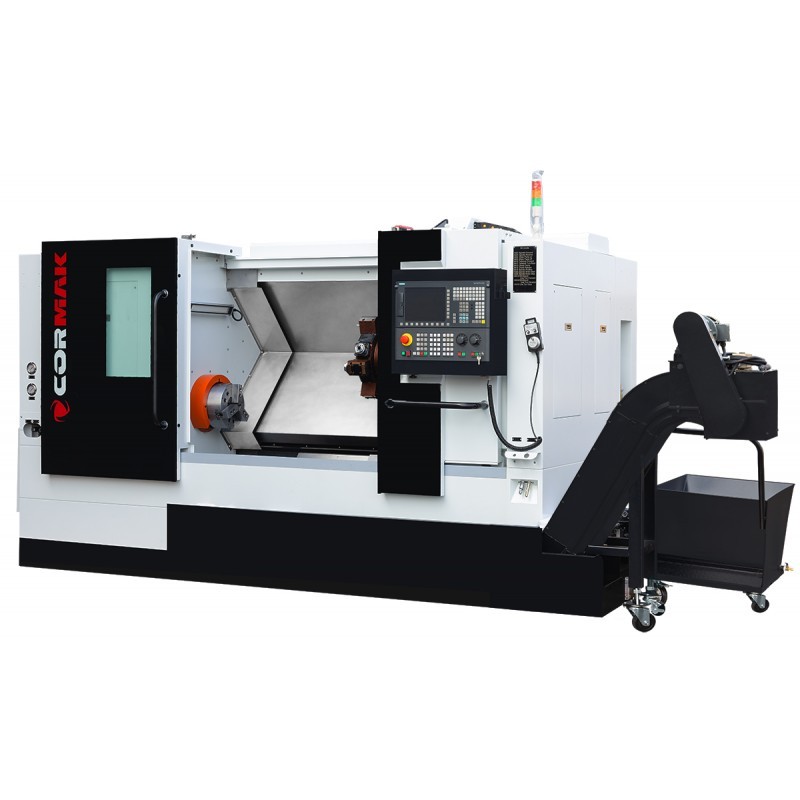
There are many types of CNC lathes, or computer numerical control machines, available on the market. These are machining tools that automatically control the movements of cutting tools via a computer. They enable the precise execution of complex machining operations, which significantly increases productivity and precision in manufacturing. In this article, we will present the various types of CNC lathes, how they work, and their applications in various industries, such as the automotive, aerospace, medical and metalworking sectors. We hope you enjoy reading it.
There are many types of CNC lathes, or computer numerical control machines, available on the market. These are machining tools that automatically control the movements of cutting tools via a computer. They enable the precise execution of complex machining operations, which significantly increases productivity and precision in manufacturing. In this article, we will present various types of CNC lathes, how they work, and their applications in various industries, such as the automotive, aerospace, medical and metalworking sectors. We encourage you to read on.
CNC lathes versus traditional lathes
Which type of lathe should you choose? Let’s start with the differences between tradition and innovation. Traditional lathes require manual operation, which means the operator must control every movement of the tool, adjust speeds and make adjustments on the fly. This type of work is time-consuming and increases the risk of errors and inaccuracies.
In contrast, various types of CNC lathes eliminate these limitations through the use of computerised numerical control. They are programmed using specialised software, which allows for the precise execution of complex machining operations with minimal human intervention. As a result, the process is faster, more precise and repeatable. Furthermore, advanced diagnostic functions enable the rapid detection and repair of any faults, thereby minimising downtime.
Types of CNC lathes
There are several basic types of CNC lathes, each with its own unique features and applications.
-
2-axis CNC lathes – the simplest type of lathe, designed for performing basic machining operations. They feature two axes of movement: X (transverse) and Z (longitudinal).
-
Multi-axis CNC lathes (3-, 4- and 5-axis) – enable more complex machining operations thanks to the additional range of tool movements. They allow for the machining of complex shapes and surfaces in a single setup.
-
Vertical CNC lathes – have a vertically positioned spindle, which allows for the machining of large and heavy workpieces. They are ideal for working with components of large diameters and short lengths.
-
Horizontal CNC lathes – have a horizontally positioned spindle, which enables the machining of long workpieces. This type of lathe is particularly useful in the production of shafts, tubes and other long components.
-
Multi-task CNC lathes (Mill-Turn) – also known as Mill-Turn, combine the functions of a lathe and a milling machine. They allow for both turning and milling operations, making them extremely versatile tools for complex machining operations.
Advantages and disadvantages of different types of CNC lathes
Each type of CNC lathe has its own advantages and disadvantages. 2-axis lathes are simple and economical, but have limited machining capabilities. Multi-axis lathes offer greater versatility, but are more expensive and more complex to operate. Vertical lathes are ideal for large workpieces but take up more space, whilst horizontal lathes are more compact but less versatile. Multi-tasking lathes are extremely versatile but also the most expensive.
Examples of applications in various industries
CNC lathes are widely used in various industries, such as the automotive industry, aerospace, medicine and the metalworking industry.
-
Automotive industry – CNC lathes are used to manufacture precision parts for engines, gearboxes and other automotive components.
-
Aerospace – CNC lathes are essential for the production of complex parts that must meet stringent quality standards.
-
Medicine – in medicine, CNC lathes are used to manufacture surgical instruments, implants and other precision medical devices.
-
Metalworking industry – CNC lathes are widely used for metalworking, enabling the production of components in a variety of shapes and sizes.
We encourage you to explore the range of CNC lathes in our shop and place your orders. Industrial machinery manufacturer Cormak also recommends other specialist products. Our range includes, amongst others, industrial machinery and metalworking machines such as:
-
industrial surface grinders,
- universal lathes.
