

For centuries, wood has remained one of the most challenging, yet most rewarding, materials to work with and restore. Any intervention on its surface requires a delicate touch, as it is easy to lose its natural structure or cause irreversible damage. This is precisely why wood cleaning lasers are becoming increasingly important, as they allow dirt and old coatings to be removed with exceptional precision, without any mechanical contact with the material.Laser wood cleaning is transforming the approach to restoration work, offering a controlled and repeatable process that is equally effective in delicate conservation work and in industrial applications.
For centuries, wood has remained one of the most challenging, yet most rewarding, materials to work with and restore. Any intervention on its surface requires a delicate touch, as it is easy to lose its natural structure or cause irreversible damage. This is precisely why laser wood cleaning is becoming increasingly important; it allows dirt and old coatings to be removed with exceptional precision, without any mechanical contact with the material.Laser wood cleaning is transforming the approach to restoration work, offering a controlled and repeatable process that is suitable for both delicate conservation work and industrial applications.
Contents
- What is laser wood cleaning?
- How does laser wood cleaning work?
- When is it worth choosing laser removal of paint and old coatings from wood?
- Laser wood cleaning or sandblasting – which works better?
- What should you look out for when choosing laser cleaning equipment?
- Summary
What is laser wood cleaning?
Today, the restoration of wooden elements requires not only effectiveness but also precision. This applies to historic joinery details as well as furniture, structures and garden architecture. Laser wood cleaning is a modern method that allows old coatings to be removed without mechanically damaging the surface of the material. Thanks to carefully selected beam parameters, it is possible to clean wood of paint, varnish, dirt or deposits, whilst leaving its structure intact.
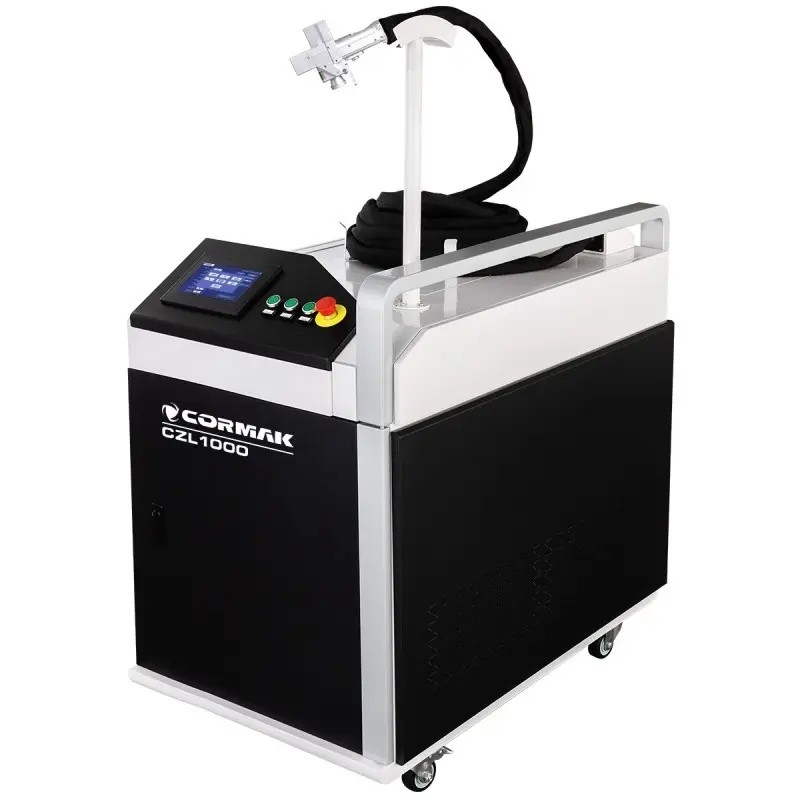
Laser technology is used in joinery workshops, restoration firms and manufacturing companies that require consistent results and wish to minimise waste. This is precisely why professional cleaning lasers, which allow work with various types of materials, are becoming increasingly popular.
How does laser cleaning of wood work?
Laser cleaning of wood is based on the interaction of a concentrated beam of light with the surface of the material. The laser’s energy causes contaminants and old coatings to vaporise or break down, without affecting the healthy layers of the wood. The entire process takes place without the tool coming into contact with the surface being treated, which reduces the risk of mechanical damage.
A modern laser for cleaning wood allows for precise adjustment of power, pulse frequency and operating speed. This enables the operator to adjust the parameters to suit the type of wood, the thickness of the coating or the degree of soiling. This is particularly important when restoring items with irregular shapes or intricate ornamentation, where traditional methods often prove insufficient.
In practice, laser wood cleaning is a quick process and requires no chemicals or abrasives. This reduces waste and shortens the time needed to prepare the surface for further treatment stages, such as painting, varnishing or impregnation.
When is it worth choosing laser paint removal from wood and old coatings?
One of the most common applications of this technology is the laser removal of paint from wood. Multi-layered paint coatings can be difficult to remove using sandpaper or chemical methods, especially when it is important to preserve the original structure of the material.
Laser removal of varnish coatings proves equally effective, allowing the surface to be cleaned before refinishing. This technology is ideal for restoring doors, windows, stairs, furniture or decorative elements made of solid wood.
Lasers for wood restoration are also increasingly being used in the conservation of historic buildings. The ability to control the beam energy with great precision allows old coatings to be removed without damaging the historical substance of the material. This solution is highly valued by conservation workshops and companies specialising in the restoration of timber architecture.
Laser wood cleaning or sandblasting – which works better?
For many years, sandblasting was the primary method for preparing wooden surfaces. It remains an effective solution for many applications; however, it is worth bearing in mind that the abrasive material interferes with the structure of the wood. As a result, surface roughness may increase or delicate details may be damaged.
Anyone considering which technology to choose should familiarise themselves with the differences between the two methods. Detailed information on this subject is provided in the article on sandblasting wood.
In many cases, a laser for cleaning wood provides greater control over the process and allows for the selective removal of only unwanted layers. It works particularly well on components requiring high precision and the preservation of the natural grain pattern.
What should you look out for when choosing laser cleaning equipment?
The selection of a suitable machine should take into account the nature of the work to be carried out, the type of materials being processed and the intensity of use. A workshop specialising in furniture restoration will require different specifications to an industrial facility carrying out mass production processes.
A modern laser for wood restoration should offer adjustable operating parameters, high beam stability and user-friendly operation. The availability of the manufacturer’s after-sales service and technical support is also of significant importance.
When selecting equipment, it is worth choosing a proven manufacturer of industrial machinery who offers not only high-quality solutions but also technical advice and support during the implementation of the technology at the facility.
Summary
Technological advances mean that laser cleaning of wood is becoming an increasingly popular method both in the joinery sector and in professional restoration work. The precision of the process, the lack of contact with the surface and the ability to effectively remove paints and varnishes mean that this solution is used wherever the quality of workmanship matters. Both laser wood cleaning and laser paint removal from wood significantly streamline the process of preparing the material for further processing. Investing in a professional laser for wood cleaning means greater productivity, consistent results and the ability to carry out even the most demanding projects with the utmost precision.
