


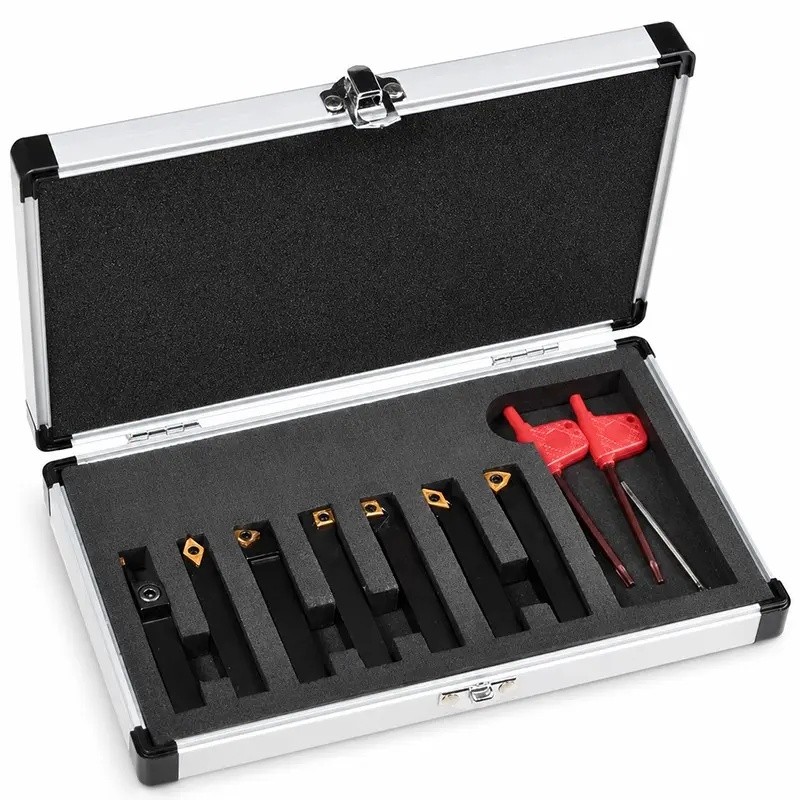
Machining requires precision, correctly selected parameters and the right tools. In practice, it is of the utmost importance to understand the different types of turning tools and their applications, as each type of tool is designed to perform different operations. The right choice affects not only the operator’s comfort but also the durability of the workpiece and the tool itself. Lathe cutting tools are among the most important components of a lathe, as they determine the accuracy of turning, surface quality and productivity.
Machining requires precision, correctly selected parameters and the right tools. In practice, it is vitally important to understand the different types of turning tools and their applications, as each type of tool is designed to perform different operations. The right choice affects not only the operator’s comfort but also the durability of the workpiece and the tool itself. Lathe tools are among the most important components of a lathe, as they determine the accuracy of turning, surface quality and productivity.
Contents
- What are turning tools?
- Types of turning tools and their applications
- How to select a turning tool for a specific type of machining?
- The importance of cutting inserts and turning accessories
- Summary
What are lathe cutting tools?
Lathe tools are cutting tools used when turning materials on lathes. Their purpose is to remove excess material from the workpiece in order to achieve the correct shape, dimensions and surface quality. Depending on the type of work being carried out, different types of lathe tools are used, which vary in design, cutting angle and intended use.
Modern tools often work in conjunction with replaceable turning insert plates, which enhances user convenience and helps to reduce running costs.
Types of lathe cutting tools and their applications
The most common types of lathe cutting tools can be categorised according to the operation being carried out. It is precisely these types of lathe cutting tools and their applications that determine how the machining process proceeds.
The most commonly used include:
- external turning tools – used for turning external surfaces,
- internal cutting tools – designed for machining bores,
- cutting tools – used for cutting material,
- grooving tools – used for cutting grooves,
- shaped cutters – enabling the creation of non-standard profiles,
- finishing cutters – used to achieve a smooth surface,
- roughing cutters – designed for the rapid removal of large amounts of material.
When selecting the appropriate type, it is worth taking into account the workpiece material, cutting parameters and the machine tool’s capabilities. Well-chosen tools and turning tools help to increase process stability and machining accuracy.
Right-hand or left-hand turning tool – what is the difference?
A question that often arises is: should you use a right-hand or left-hand turning tool? The difference stems from the direction of feed during turning.
A right-hand tool operates when moving from the right to the left side of the workpiece. This is the most commonly used approach in standard machining. A left-hand cutting tool, on the other hand, operates in the opposite direction – from left to right. The choice of the appropriate type depends on the workpiece’s design and how the material is clamped.
Knowing when to use a right-hand or left-hand turning tool helps to avoid errors during turning and improves workplace safety.
How do you choose a lathe tool for a particular machining operation?
Those new to machining often wonder how to select a turning tool. Three aspects are of key importance here: the type of material, the type of operation being carried out, and the machine tool’s specifications.
Different inserts are used for machining steel than for aluminium or stainless steel. The rigidity of the machine and the spindle speed are also important. In the case of modern production lines, the quality of the machine tools offered by the industrial machinery manufacturer is of paramount importance, as it affects the stability of the cutting process.
If you are wondering how to select a turning tool, it is also worth paying attention to the blade geometry, the corner radius and the type of insert clamping.
How should a lathe tool be set up?
Just as important as selecting the right tool is knowing how to set up a lathe tool. Incorrect set-up can cause vibration, reduce surface finish quality and lead to faster tool wear.
The tool should be positioned exactly at the height of the spindle axis. Setting it too high or too low will adversely affect the cutting process. It is also important to ensure the correct protrusion of the tool from the holder – too much protrusion can lead to instability.
It is worth remembering that correct setting and regular maintenance of tools affect their service life. The tips described in the article on how to sharpen turning tools may also be helpful.
The importance of inserts and turning accessories
Modern machining increasingly relies on indexable insert systems. Carefully selected inserts for lathe tools enable better surface quality and extend the service life of the tools.
Additional equipment, such as tool holders, chucks and specialist turning fixtures, also plays an important role, as it enhances precision and improves the operator’s comfort.
Summary
Understanding the different types of turning tools and their applications enables more effective planning of the machining process and achieves better results. The correct choice of tool influences the accuracy, efficiency and durability of the entire machining process. Regardless of whether conventional metal lathes or modern CNC lathes are used, both the selection of the appropriate tool and knowledge of how to set up the lathe tool, as well as how to select a lathe tool for a specific material and type of machining, are of paramount importance.
