

Choosing the right machine for cutting steel, aluminium or other alloys should not be left to chance. Even at the needs analysis stage, it is worth considering whether a metal cutting machine would be a good solution. Which one should you choose and what should you look for when buying? Well-chosen equipment affects not only the quality of the cut, but also work efficiency and operating costs, so the decision should be preceded by an analysis of the technology and specifications.
Choosing the right machine for cutting steel, aluminium or other alloys should not be left to chance. Even at the needs analysis stage, it is worth considering whether a metal cutting machine would be a good solution. Which one should you choose and what should you look for when buying? Well-chosen equipment affects not only the quality of the cut, but also work efficiency and operating costs, so the decision should be preceded by an analysis of the technology and specifications.
Contents:
- Types of metal cutters – an overview of technologies
- What to look for when choosing a cutter?
- Metal cutting machines – which one to choose for a workshop, and which for production?
- Modern cutting technologies – when is it worth investing in them?
- Summary
Types of metal cutters – an overview of technologies
There are several basic types of equipment available on the market, which differ in how they operate and their applications. Among the most popular are metal band saws, which ensure precise and cost-effective cutting of profiles and pipes, as well as vertical cutters, used for more demanding operations.
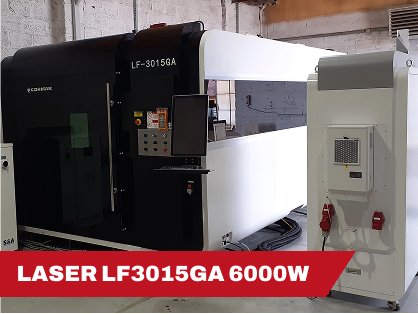
It is also worth noting modern laser cutters, which allow for extremely accurate and fast cutting of even complex shapes. Such solutions are mainly used in industry, where repeatability and high-quality edges are essential.
The choice of the right type of machine should depend on the nature of the work – a metalworking workshop has different requirements to a production plant using advanced metalworking machinery.
What should you look for when choosing a metal cutter?
When deciding which metal cutter is best, several key parameters should be analysed. First and foremost, the power of the machine and the cutting range are crucial, as these determine its ability to work with different materials and thicknesses.
Equally important are the precision of the tool’s guidance and the stability of the structure, which translate into the quality of the finished surface. In the case of intensive use, the durability of the components and ease of servicing are also significant.
In practice, the purchase of a metal cutter and the choice of model also depends on:
- the type of material – structural steel, stainless steel, aluminium
- frequency of use – occasional or continuous operation
- the required level of automation
- available workspace
Analysing these factors helps avoid choosing the wrong equipment and increases the return on investment.
Metal cutting machine – which one to choose for a workshop, and which for production?
In workshop conditions, universal machines that combine functionality with ease of use work best. In such cases, band saws are often chosen, as they offer good value for money and a wide range of applications.
In production facilities, however, where efficiency and repeatability are key, the choice falls on more advanced technological solutions. Metal cutting machine – which one to choose in such an environment? It should be designed for continuous, often automated operation, which significantly impacts the speed of order fulfilment.
It is worth remembering that a professional manufacturer of industrial machinery offers solutions tailored to different levels of sophistication – from simple machines to comprehensive production lines.
Modern cutting technologies – when is it worth investing in them?
Technological advancements have led to more and more companies deciding to invest in solutions such as laser or plasma cutting. Their greatest advantage is high precision, minimisation of material waste and the ability to carry out complex projects.
Modern systems are particularly recommended for companies that carry out batch orders or those requiring high precision, where traditional methods may prove insufficient.
Summary
Choosing the right metal cutting machine should be a well-considered decision based on actual technological needs. Both simple workshop solutions and advanced industrial systems have their uses, but it is crucial to match them correctly to the nature of the work.
By analysing the available options and comparing specifications, it is easier to determine which metal cutting machine will meet expectations in terms of performance, precision and running costs. Ultimately, a metal cutting machine should support the company’s growth and enable the execution of increasingly demanding projects.
