

A chain trencher is designed to create narrow, even trenches quickly for cables, pipes, fibre-optic lines and irrigation systems. Learn how it works, when it is worth using and which parameters matter when choosing a machine.
Chain trencher – what is it used for and when should you choose one?
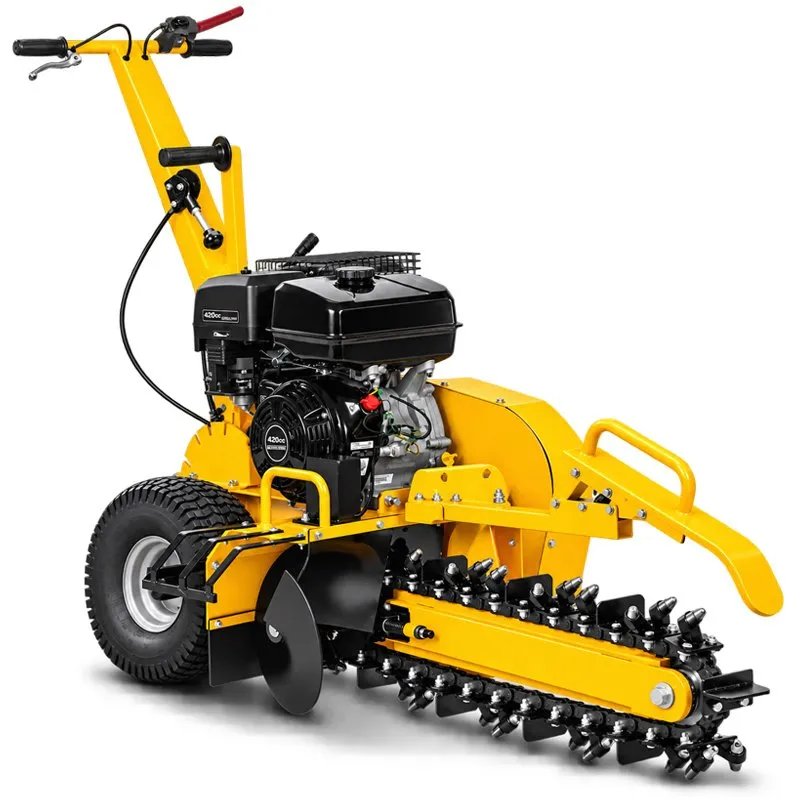
A chain trencher is a specialised machine designed to create narrow, even and repeatable trenches quickly. It is commonly used for laying electrical cables, fibre-optic lines, water pipes, irrigation systems and other technical services. CORMAK offers a range of groundworks machinery for different types of site preparation and outdoor work.
Unlike a conventional excavator fitted with a bucket, a chain trencher uses a moving chain equipped with cutting teeth. This makes it possible to create a long, relatively narrow trench while limiting the amount of soil that has to be removed.
How does a chain trencher work?
The main working element is a guide bar fitted with a continuous chain and cutting teeth. As the chain moves, the teeth penetrate the ground, break up the soil and carry the excavated material away from the trench.
The operator sets the required working depth and guides the machine along the planned route. One example is the CORMAK GF1500 chain trencher, designed for linear trenches for applications such as cable and pipe installation.
What is a chain trencher used for?
Chain trenchers are particularly useful when a long, narrow trench with a consistent profile is required.
Typical applications include trenches for:
- electrical cables,
- fibre-optic lines,
- water pipes,
- irrigation systems,
- drainage,
- technical services,
- garden installations,
- outdoor and fencing installations.
A narrow trench is especially beneficial on lawns, landscaped areas and private properties because less ground is disturbed. It also reduces the amount of excavated material that needs to be moved and later used for backfilling.
Chain trencher or mini excavator?
A mini excavator is the more versatile machine. It can carry out wider excavations, shape ground, move material and work with a range of attachments.
A chain trencher is more specialised. When tens or hundreds of metres of cable or pipe need to be installed, it can provide a more consistent trench width while reducing unnecessary excavation.
When is a chain trencher worth choosing?
This type of machine can be particularly useful for installation contractors, electricians, telecommunications companies, irrigation specialists, landscapers and construction businesses.
The greatest benefits are achieved when similar trenches are required regularly. For a single short trench, purchasing a specialised machine may not always be justified.
How do you choose a chain trencher?
Trench depth and width
The maximum working depth should match the type of installation being carried out. Trench width is equally important because an unnecessarily wide excavation means more soil to remove and more work during reinstatement.
Engine and cutting system
Engine power is important, but it should not be considered on its own. The chain design, cutting teeth, transmission and depth adjustment system all influence how effectively the machine performs.
Maintenance and wear parts
The chain and cutting teeth work directly in the ground and therefore experience normal wear. For regular professional use, easy inspection and access to suitable replacement wear parts are important considerations.
How do ground conditions affect trenching?
Ordinary soil and clay are generally easier to work in than very hard ground containing stones or thick roots. Difficult conditions place greater loads on the chain and cutting teeth and may increase wear.
Existing underground utilities should always be identified before trenching begins. If site preparation also involves removing tree stumps or roots, a CORMAK FP15 stump grinder can complement the groundworks equipment.
Summary
A chain trencher is designed to create long, narrow and consistent trenches efficiently. It is particularly well suited to cable, pipe, fibre-optic, irrigation and other linear installation work.
When selecting a machine, consider the required depth and width, chain and tooth design, engine and drive system, ground conditions and availability of wear parts. The right trencher can significantly improve the efficiency of installation and groundworks.
